










Spices are fundamental to Indian cooking. They add colour, aroma, flavour and character to every dish, from everyday meals to festive recipes. But as customers are becoming more conscious about food quality, health, sustainability, and product sourcing. The choice between conventional and organic spices has become increasingly important.
Even though both types of spices will look similar, their cultivation, procedures, certification, environmental impact, and market value will be different. Knowledge of these differences will help customers, retailers, food manufacturers and international buyers make better purchasing decisions.
At PJM, we always understand the importance of supplying carefully selected spices that will meet the different requirements of domestic and international markets.
What are Organic Spices?
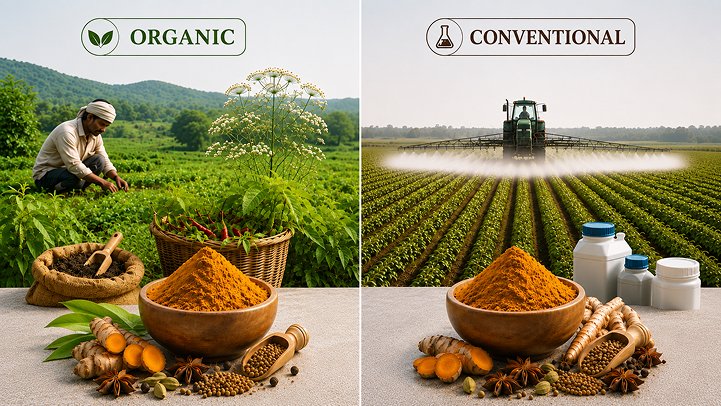
Organic spices have been refined according to recognised organic farming standards. Farmers will generally avoid synthetic pesticides, chemical fertilisers, genetically modified organisms, and artificial treatments. Instead, they are generally used as natural compost, crop rotation, biological pest management, and other sustainable farming methods.
The production of certain certified Indian organic spices will also require proper documentation, traceability, inspections, and acceptance with applicable organic certification standards. It will help buyers to verify that the spices have been produced and handled according to the organic requirements. Organic cultivation not only focuses on the final product, but it also focuses on soil health, diversity, responsible farming practices, and long-term agricultural sustainability.
What Are Conventional Spices?
Conventional spices are produced through standard agricultural methods. Farmers will use approved fertilisers, pesticides, herbicides, and other agricultural inputs which will protect the crops, control pests, and improve productivity.
This type of farming will help producers to achieve consistent yields and meet large market demands. However, the quality of the spices might vary depending on the cultivation practices, harvesting methods, storage facilities, processing conditions, and the quality control standards.
Conventional does not mean poor quality. Reputable suppliers will provide premium quality spices which are carefully sourced, hygienically processed, have proper testing, and have responsible supply-chain management.
Major Differences between Organic vs Conventional Spices
1. Farming Methods
It is the most important difference. It lies in how the spices are cultivated. Organic farming follows certification-based standards and is generally restricted to the use of synthetic agricultural chemicals. Farmers only focus on natural soil enrichment, biological pest management, and sustainable cultivation practices. Whereas conventional farming might use approved chemical inputs that support crop growth, increase productivity, and manage pests and diseases. These practices might vary between farms, regions, and spice varieties.
2. Certification and Traceability
Certified organic herbs and spices will require verification from the recognised certification bodies. The total supply chain, which includes cultivation, handling, storage, processing and packaging, may require compliance with organic standards.
Conventional spices do not require organic certifications. However, they will still be tested and certified against food safety, quality, residue, microbiological, and export-related requirements.
Businesses that are sourcing wholesale organic spices will always ask for valid certification documents, product specifications, batch information, and traceability records.
3. Flavour and Aroma
The flavour and aroma of the spice depend on different factors, this includes variety, soil, climate, harvesting time, drying methods, storage, age, and essential-oil content.
Many customers believe that organic spices offer a more natural, intense, and fresh flavour. But the flavour quality will not be determined by the organic label alone. A properly harvested and processed conventional spice will sometimes have a better aroma than an old or poorly stored organic product.
At PJM, we carefully source and get quality assessment done, which will help to ensure that the spices will maintain their natural flavour, colour and aroma.
4. Chemical Residues
Organic farming will aim to minimise the use of synthetic pesticides. However, organic does not mean completely residue-free since environmental contamination, neighbouring farms, water, soil, or handling conditions will sometimes affect agricultural products.
Conventional spices will contain permitted pesticide residues, but these will remain within the maximum residue limits created by relevant authorities.
Reliable suppliers of export-quality spices will conduct testing based on the buyer specifications, destination-country regulations, and applicable food-safety standards.
5. Environmental Impact
Organic farming practices have focused on soil fertility, biodiversity, natural ecosystems, and reduced dependency on synthetic agricultural inputs. Crop rotation, composting, and biological pest control will help to support long-term soil health.
Conventional farming will produce higher yields in certain situations, but excessive or irresponsible chemical usage will negatively affect soil, water and surrounding ecosystems.
Selection of responsibly produced Indian organic spices will support more sustainable agricultural practices and will encourage environmentally conscious farming communities.
6. Availability and Price
Conventional spices are mainly available and generally more affordable since they are produced on a large scale. Organic cultivation will involve certification costs, documentation, labour-intensive farming, separated storage, lower yields, and controlled processing.
As a result, certified bulk organic spices will cost more than comparable conventional products. The price difference will depend on the spice variety and harvest season, certification, origin, quality grade, testing requirements, and order volume.
Benefits of Choosing Organic Spices
There are many reasons why customers and businesses select organic spices. The organic products appeal to health-conscious customers who prefer food produced with fewer synthetic agricultural inputs. They are also popular among natural-food brands, premium retailers, organic restaurants, wellness companies, and environmentally responsible businesses.
Certified organic herbs and spices will help brands to meet growing customer demand for transparent sourcing, sustainable farming, clean-label products, and traceable ingredients.
For importers, distributors, and food manufacturers, sourcing bulk organic spice will create chances in premium and specialised markets.
Why Quality Matters Beyond the Organic Label
Organic certifications are important, but it is not the only indicator of quality. Buyers will also evaluate:
- Purity and cleanliness
- Moisture content
- Colour and aroma
- Essential-oil content
- Foreign matter
- Pesticide residue levels
- Microbiological quality
- Aflatoxin levels
- Heavy metals
- Packaging and shelf life
- Batch traceability
The dependable Indian spice exporter will provide clear product specifications and relevant documentation based on the customer’s requirements.
PJM focuses on supplying premium quality spice through responsible sourcing, quality inspection, hygienic handling, and professional export support.
Selection of the Reliable Organic Spice Supplier
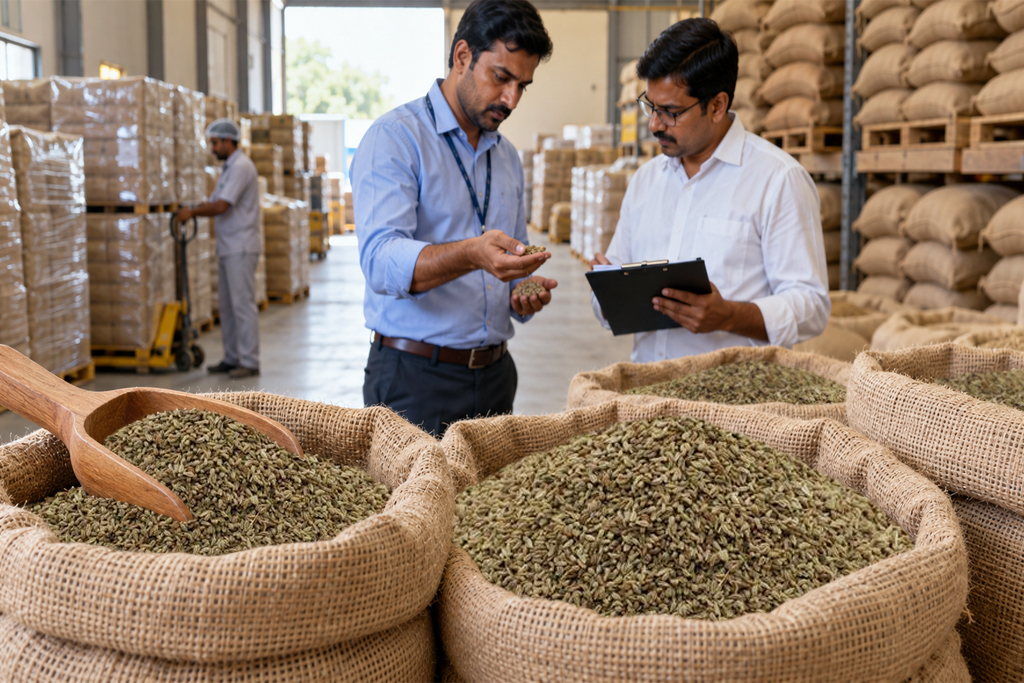
Businesses looking for an organic spice manufacturer in India will evaluate more than pricing. A reliable supplier will understand certification requirements, export documentation, product traceability, packaging, logistics, testing, and destination-market regulations. While selecting a spice export company, buyers will ask the following questions:
- Is the organic certification valid and relevant to the target market?
- Can the supplier provide batch-wise traceability?
- Are laboratory testing options available?
- Can the company handle bulk and customised orders?
- Does the supplier understand export packaging and documentation?
- Can the spices be supplied in whole, ground, crushed, or customised formats?
PJM works with businesses that are looking for dependable sourcing solutions for conventional, organic, retail, and bulk spice requirements.
Conclusion
The decision between conventional and organic spice depends on your priorities, budgets, market positioning, certification requirements, and intended use.
Conventional spices will offer affordability, availability, and large-scale supply, whereas organic spices appeal to customers who value certified farming practices, sustainability, traceability, and premium positioning.
Nevertheless, buyers will focus on sourcing spices from a trustworthy supplier with strong quality-control practices. Proper cultivation, processing, testing, packaging, and storage are important for maintaining flavour, safety, and consistency.
With a commitment to supplying premium-quality spice, Indian organic spice, and export-quality spice, PJM is ready for supporting businesses to look for reliable Indian spice sourcing solutions.
FAQs
What is organic spice?
Organic spice is cultivated, processed, and handled according to organic standards. Certified organic production generally prohibits synthetic fertilisers, pesticides, and genetically modified organisms.
What is a conventional spice?
A conventional spice is grown through standard agricultural practices, which will include approved synthetic fertilisers and pesticides. The quality will depend on cultivation, harvesting, processing, testing and storage conditions.
Are organic spices better than conventional spices?
Organic spices will be preferable for customers who give priority to certified farming methods, sustainability, and reducing the use of synthetic agricultural inputs. However, both organic and conventional spices will be evaluated for quality, purity, and safety.
Does PJM supply bulk organic spices?
Yes, PJM supports customers looking for bulk organic spice, wholesale organic spices, conventional spices and customised spice-sourcing solutions based on product availability and buyers’ requirements.